The solution in context
Coordinate the front office around the patient experience.
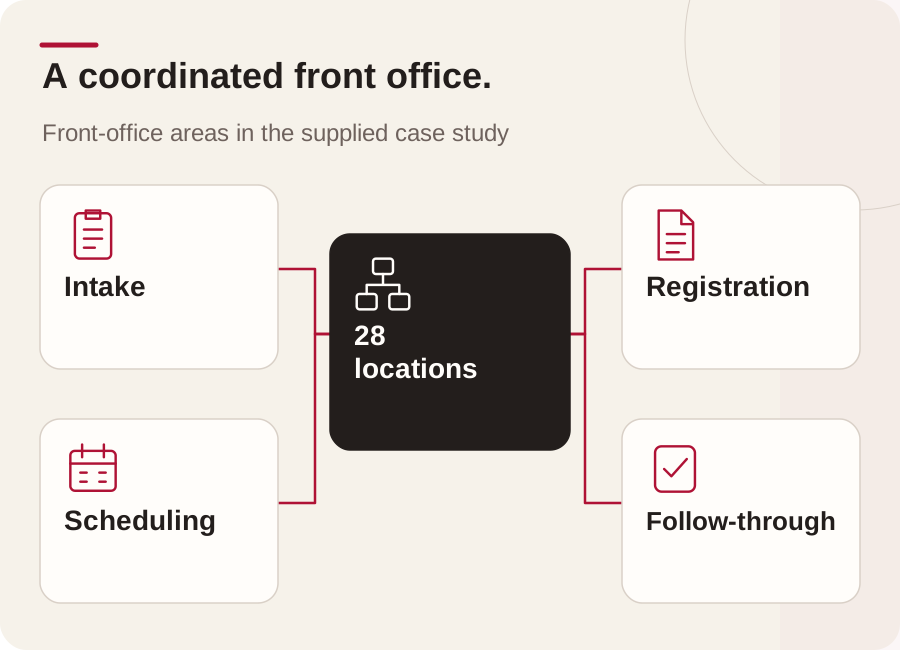
For a practice with many locations, a consistent welcome is only one part of the front desk. Patient intake, registration, scheduling, and administrative follow-through also need to work together. When those responsibilities connect, the organization can evaluate the whole patient journey rather than improving one task in isolation.
The supplied PTOC case study describes a collaborative virtual front desk (VFD) solution that standardized the patient experience across 28 locations. It reports operational and revenue outcomes from that broader front-office ecosystem. The summary does not specify the staffing arrangement, systems, or rollout steps.
HiBridge performance
Reported improvements in front-office operations.
The supplied presentation groups these four results under “HiBridge Performance.” They describe this practice’s experience within its collaborative operating model.
Broader ecosystem benefits
Patient access and administrative performance.
The presentation separately identifies benefits of the completed ecosystem. These outcomes reflect the coordinated front-office environment, not an isolated software feature.
Source: PTOC case study materials supplied by HiBridge. Results are reported; the measurement period and methodology were not specified. Outcomes vary by organization.
Why coordination matters
One front desk connects several business outcomes.
The reported results cover both the cost of operating the front desk and what happens after a patient arrives. That makes this a useful example of evaluating the front office as a connected process.
Payroll and attention
A coverage model should be evaluated alongside the administrative work it creates or removes. Lower payroll alone does not explain whether patients can get help or staff can complete their work.
Intake and revenue
Registration and scheduling details are part of the front-office process. Tracking denials associated with those tasks can show where teams need clearer procedures or more reliable follow-through.
Access and capacity
Unused appointment slots and no-shows describe different aspects of access and capacity. Reviewing them separately helps a practice see where scheduling and patient communication need attention.
Applying the idea
How could a coordinated front desk help your organization?
The following are planning steps for your organization, not additional claims about PTOC’s implementation. They can help any business with a front desk decide what to evaluate in a pilot.
- Map the arrival journey.Identify where visitors wait, repeat information, or need help. Choose which steps need a person, which can use approved self-service, and who handles an exception.
- Define responsibility and coverage.Agree who provides the front-desk team, when support is available, and how a request reaches the right on-site employee. Review required system access before launch.
- Measure a comparable baseline.Record the current cost, time to assistance, incomplete tasks, and visitor feedback. In healthcare, use clearly defined claim and appointment measures as well.
- Pilot, review, and adjust.Compare similar periods and account for changes in volume, staffing, or services. Expand only after checking both the visitor experience and the operating results.
Build the front desk around your workflow.
Tell HiBridge about your locations, current coverage, and the tasks you want to improve. Explore a virtual front desk model and decide which outcomes to measure.